 Offers
 Packs & Gifts
 Featured
 Brands
 Blog
Blog- Out of stock


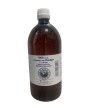
Liquid rennet
1000 ml container.
 5% off in your first purchase! And subsequent purchases are also cheaper with FarmaClub.
 Free samples with orders over 59€!
 Need more units? Can't find what you're looking for? Contact us


Liquid rennet extract of animal origin is formulated for milk coagulation in the artisanal and industrial production of cheeses and curds. Derived from the abomasums of calves and lambs, it combines an approximate proportion of chymosin (≈85%) and pepsin (≈15%) that act on kappa casein, promoting the proteolytic breakdown necessary for curd formation. The product is a clear, stable liquid with a characteristic, naturally occurring aroma that does not negatively affect the final sensory profile of the cheese when used in the appropriate dosages.
From a functional standpoint, chymosin provides precise and controllable coagulation, while pepsin modulates texture and the development of proteolytic overripening. The formulation includes 15% salt as a stabilizing agent and preservatives in reduced concentrations (0.1% potassium sorbate and 0.1% sodium benzoate) to promote preservation without compromising its activity under recommended storage conditions. It does not act as an antimicrobial agent; its function is enzymatic on milk proteins, and therefore it does not eliminate bacteria, viruses, or fungi present in the raw material.
Its stability and coagulating activity make it suitable for both industrial processes and small-scale home production. The dosage depends on several technological variables: type of milk (cow, goat, sheep), milk state (raw or pasteurized), working temperature, calcium content, and desired coagulation time. As a reference, an approximate dosage would be 1 liter of extract per 4,000 liters of milk to achieve coagulation of cow's milk at 35 °C in approximately 45 minutes. On a smaller scale, this ratio facilitates the proportional calculation of volumes (for example, 0.25 mL per liter of milk; 2.5 mL for 10 L).
Automatic translation. It may contain errors.
The Farmaten Online Pharmacy sends its products free of charge to all of Spain, including Albacete, Ciudad Real, Cuenca, Guadalajara or Toledo.
- Rapid and homogeneous coagulation that facilitates reproducible processes.
- Development of firm curds and stable textures in cheeses.
- Balanced enzyme profile (chymosin/pepsin) for firmness and flavor control.
- Stable formulation thanks to salt and preservatives in low concentrations.
- Suitable for both industrial production and small-scale home production.
- Simple dosage ratio for proportional scaling.
Is it suitable for vegetarian or vegan diets?
No. Being of animal origin (calf and lamb stomachs), it is not compatible with strict vegetarian or vegan diets.
Does the extract act as a disinfectant or eliminate microorganisms?
No. Its function is enzymatic, acting on milk proteins to cause coagulation; it has no antimicrobial activity against bacteria, viruses, or fungi.
What is the reference dosage?
The recommended reference dosage is approximately 1 liter of extract per 4,000 liters of milk for cow's milk at 35°C and coagulation in 45 minutes. For smaller quantities, proportional doses can be calculated (0.25 mL per liter of milk).
Can it be used with raw milk?
Yes, it can be used with raw milk, although the safety and quality of the final product will depend on traceability practices and microbiological control of the milk. The presence of microbial load can affect the consistency and sensory profile of the cheese.
How does it affect the flavor of the cheese?
The enzymatic profile (high in chymosin and with pepsin) contributes to the formation of the curd and the development of proteolytic nuances during ripening; the final sensory effect depends on formulation, ripening time and technological conditions.
Does it require any special health certification?
This is a food ingredient; compliance with food and ingredient regulations depends on local legislation and the manufacturer's labeling. Verification of specific certificates (e.g., suitability for religious diets) requires consulting the supplier's documentation.
How does storage temperature affect activity?
Storage at recommended temperatures maintains enzymatic activity. Prolonged storage at higher temperatures (e.g., >15–20 °C) may result in a gradual loss of coagulating activity.
Preparation for use involves selecting the appropriate dose based on the milk volume, temperature, and desired coagulation time. The typical procedure includes pre-diluting the extract in cold water to ensure a homogeneous dosage throughout the milk volume.
The diluted solution is added to the milk, which has been previously brought to the coagulation temperature, using gentle mixing to ensure the enzyme is evenly distributed. The resting period without stirring allows the curd to form and firm up to the cutting point.
Examples of proportional dosage: approximately 2.5 ml are used for 10 liters of milk; 25 ml for 100 liters (based on 1 L/4,000 L). Technical adjustments may require prior testing depending on conductivity, available calcium, and characteristics of the milk batch.
It is recommended to store the product in a cool, dark place; the ideal storage temperature is between 5°C and 8°C. If this temperature cannot be maintained, stability is reasonably maintained between 15°C and 20°C, although a slight decrease in activity may occur over time. The extract is for food use only; it is not intended for direct ingestion. Keep out of reach of children. Avoid prolonged contact with skin and eyes; in case of accidental contact, rinse thoroughly with water. To ensure the food safety of the final product, it is advisable to apply good manufacturing practices and control of the dairy raw material. Check the expiration date and specific conditions printed on the packaging before use.
Active ingredients: natural ferments derived from beef and lamb rennet (chymosin ≈ 85%, pepsin ≈ 15%). Preservatives and stabilizers: 15% salt, 0.1% potassium sorbate, 0.1% sodium benzoate. Water and food-grade excipients.
Recommended recipe: Fresh curd-type cheese (for 10 L of milk)
Ingredients: 10 L of fresh milk (cow or goat), 2.5 mL of diluted rennet extract, 50–100 mL of lactic culture (optional, according to preference), salt to taste.
Process: The milk is heated to 32–35 °C. If using a culture, it is added and allowed to develop for 20–30 minutes. The extract dosage is calculated based on a ratio of 1 L to 4,000 L; for 10 L, this corresponds to approximately 2.5 mL, previously diluted in cold water. The solution is incorporated homogeneously, and the temperature is kept constant. After 30–60 minutes (depending on the desired firmness), the curd formation is checked, and it is cut into uniform grains. The whey is drained, and the curd is molded or lightly pressed. Salting can be done in brine or dry, according to preference. The time and texture can be adjusted by varying the temperature, cutting, and pressing.
Suggested diet with the product:
- Fresh cheese obtained with this extract can be part of a balanced diet as a source of protein and calcium in moderate portions (e.g., 30–50 g per serving).
- Adjust consumption in people with lactose intolerance; fresh cheeses contain lactose in a higher proportion than cured cheeses and may not be suitable for severely intolerant people.
- In protein diets or muscle recovery, fresh cheese provides useful amino acids; combine with vegetables and whole grains for nutritional balance.
- Consider dietary and religious restrictions: due to its animal origin, this ingredient is not appropriate for strict vegetarian diets or for regimes that require halal/kosher certification without additional documentary verification.

Liquid rennet
1000 ml container.